
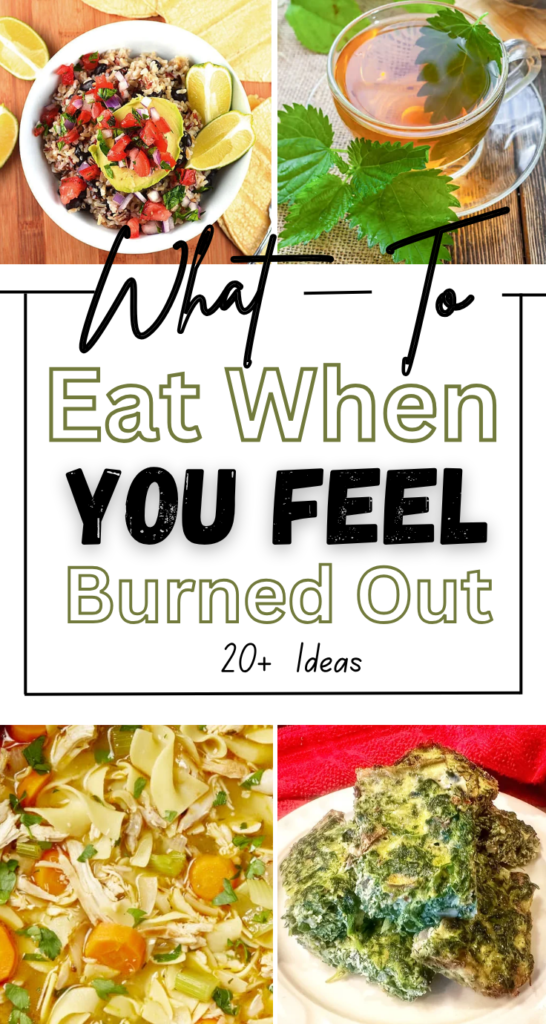
It doesn’t happen all at once.
Burnout creeps in quietly—through long days, skipped breaks, and the constant feeling of being “on.” One day you’re managing everything just fine, and the next… even the smallest tasks feel heavy.
Your energy is low, your mind feels foggy, and the idea of cooking something from scratch feels like way too much.
You stand in the kitchen for a moment, staring at the counter, trying to decide what to eat—but nothing sounds good. Not because you’re not hungry, but because you’re too tired to care.
And that’s the tricky part about burnout. It doesn’t just drain your energy—it takes away your motivation to take care of yourself in the ways that actually help.
But this is where food can quietly support you.
Not complicated meals. Not anything that requires effort you don’t have.
Just simple, nourishing, low-effort food that helps you refuel without overwhelming you even more.
In this post, we’re focusing on exactly that—what to eat when you feel burned out, with ideas that are easy, comforting, and realistic for low-energy days.
Because even if you can’t do everything right now, you can still do this one small thing: eat something that helps you feel a little better.
Slow cooker bone broth — sipped all day:
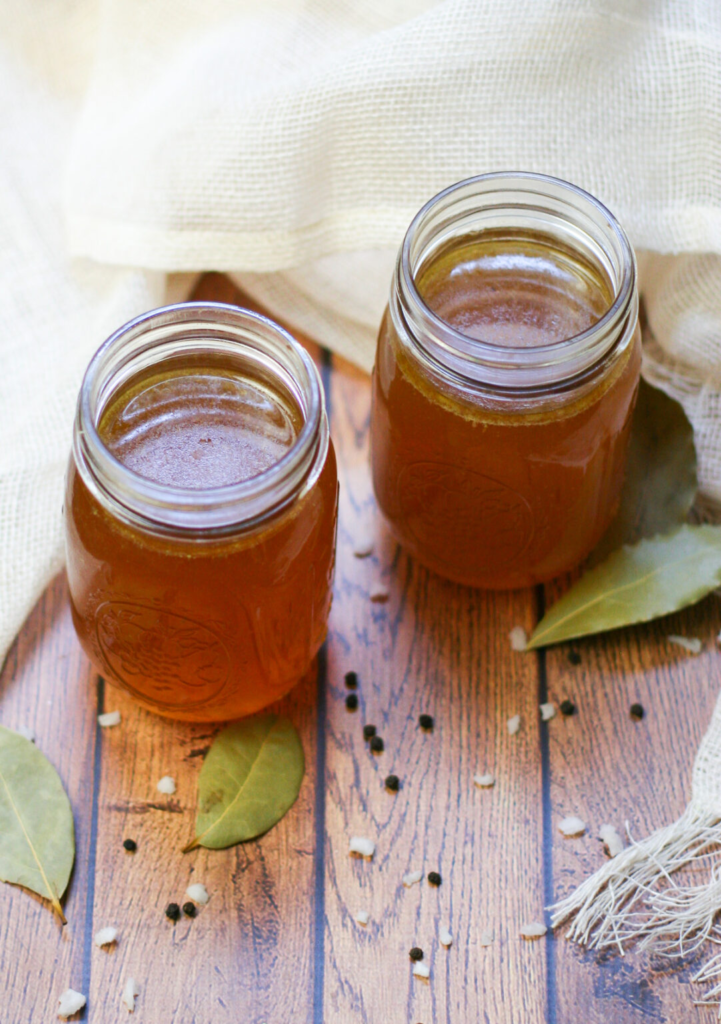
Try This Amazing Recipe By Ericajulson
How to make it:
Add roasted chicken or beef bones to a slow cooker with water, apple cider vinegar, onion, garlic, carrots, celery, and bay leaves.
Cook on low for 12-24 hours. Strain and store in the fridge — the fat cap that forms on top is healing, not a problem.
Heat a mug each morning and afternoon. Season with sea salt.
Sip slowly. This is not a meal — it is medicine in a mug and it works best when you drink it consistently over several days.
Ashwagandha banana smoothie:

Try This Amazing Recipe By Learningherbs
Ashwagandha is the most clinically studied adaptogen for burnout specifically — not general stress, but the specific state of adrenal dysregulation that characterizes burnout.
Studies show it reduces cortisol by 27-30%, improves adrenal reserve, and reduces burnout symptom scores significantly after 8 weeks of consistent use.
Soft scrambled eggs with avocado:
How to make it:
Whisk 3 eggs with a splash of cream, salt and pepper.
Melt a generous knob of butter in a pan on the lowest heat setting possible. Pour in eggs. Stir very slowly with a spatula, moving every 30-45 seconds.
Cook for 4-5 minutes until barely set and glossy — they should look almost underdone when you take them off.
They continue cooking from residual heat. Slide onto a plate with sliced avocado and a pinch of flaky salt. Eat slowly. Do not rush this meal.
Warm lentil and sweet potato soup:

Try This Amazing Recipe by Peanutbutterrunner
Lentils are one of the highest food sources of pantothenic acid — the adrenal recovery vitamin — alongside being loaded with folate, iron, and complete plant protein.
Sweet potato provides vitamin B6 for neurotransmitter synthesis and beta-carotene which reduces the oxidative stress that burnout generates in neural tissue.
Iron from the lentils is critical — burnout frequently depletes iron stores in a way that amplifies fatigue and brain fog significantly.
Salmon with steamed broccoli and brown rice:
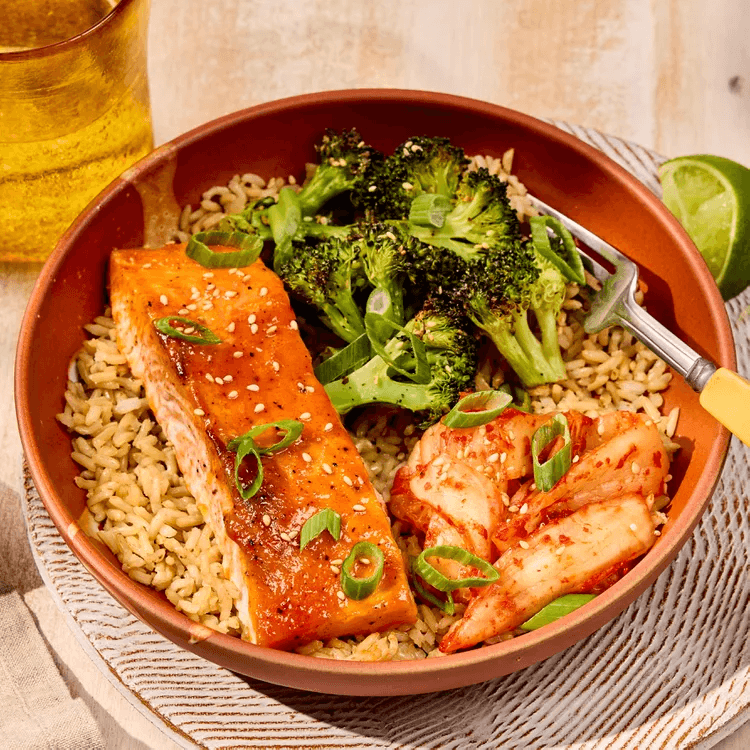
Try This Amazing By Eatingwell
This plate is the most complete burnout recovery meal on this list. Salmon provides EPA and DHA which repair the neural cell membranes that chronic stress damages.
Broccoli contains sulforaphane which crosses the blood-brain barrier and directly reduces neuroinflammation — the underlying biological state of burnout.
Brown rice provides complex carbs that stabilize cortisol patterns.
The combination addresses inflammation, neural repair, and hormonal stabilization simultaneously in one dinner.
Overnight oats — made before the week starts:
How to make it:
Sunday: make 4-5 jars simultaneously. Each jar: 1/2 cup oats, 2/3 cup oat milk, 1 tbsp chia seeds, 1 tsp maple syrup, pinch of cinnamon.
Stir, seal, refrigerate. Each morning: pull a jar, top with whatever fruit and nut butter is accessible, eat before opening your laptop.
The act of having breakfast already done before the day starts is one of the most protective things you can do for yourself during burnout recovery. Remove decisions. Preserve energy.
Warm miso soup with tofu and seaweed:
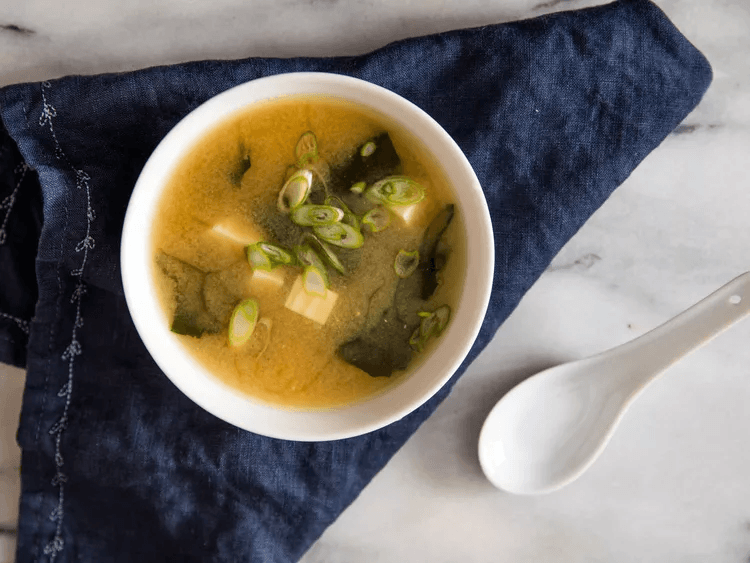
Try This Amazing Recipe By Seriouseats
Miso is fermented and contains billions of probiotic organisms that directly support the gut microbiome — which burnout consistently disrupts.
Dark chocolate and walnut Bites:
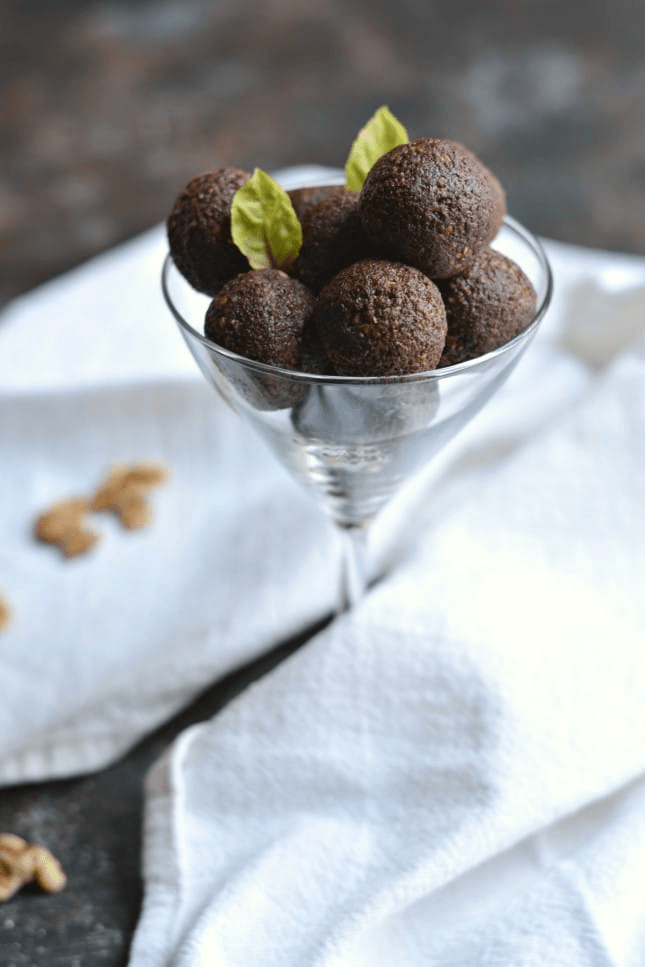
Try This Amazing Recipe By Skinnyfitalicious
Golden milk before bed — every night:

Try This Amazing Recipe By Budgetbytes
Sleep is the primary mechanism of burnout recovery and burnout almost always disrupts it — either too much sleep that isn’t restorative, or inability to sleep despite exhaustion.
Turmeric’s curcumin reduces the neuroinflammation that disrupts sleep architecture.
Spinach and mushroom frittata:
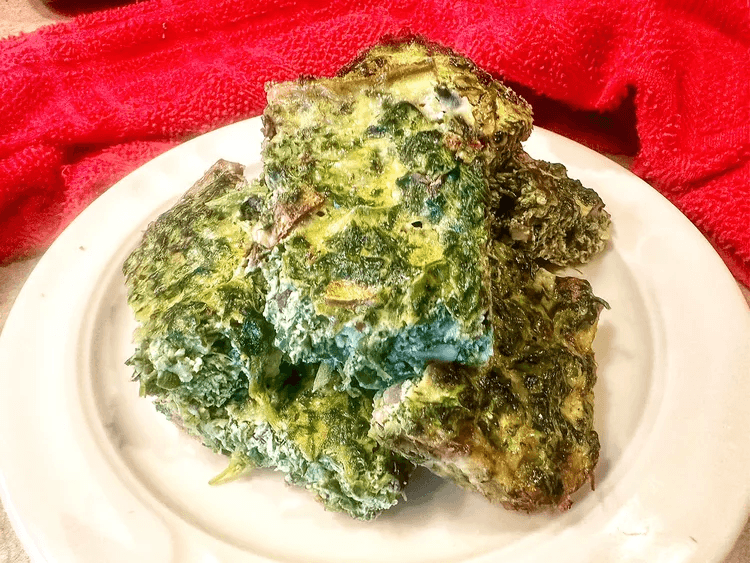
Try This Amazing Recipe By Allrecipes
How to make it:
Sauté sliced cremini mushrooms in butter on high heat until deeply golden — 5 minutes.
Add 2 large handfuls of spinach, wilt 1 minute. Season well. Beat 6 eggs with salt, pepper, and a splash of milk.
Pour over vegetables in an oven-safe skillet. Cook on stovetop 3-4 minutes until edges set.
Transfer to 375°F oven for 12-14 minutes until puffed and just set in the center.
Slice into 6 wedges. Eat warm or cold from the fridge. Three days of breakfast or lunch solved from one 25-minute effort.
Simple chicken and rice — the recovery bowl:

Try This Amazing Recipe By Skinnytaste
Chicken and rice is the most universally prescribed recovery food across cultures During Burnout.
Roasted root vegetables with olive oil and herbs:
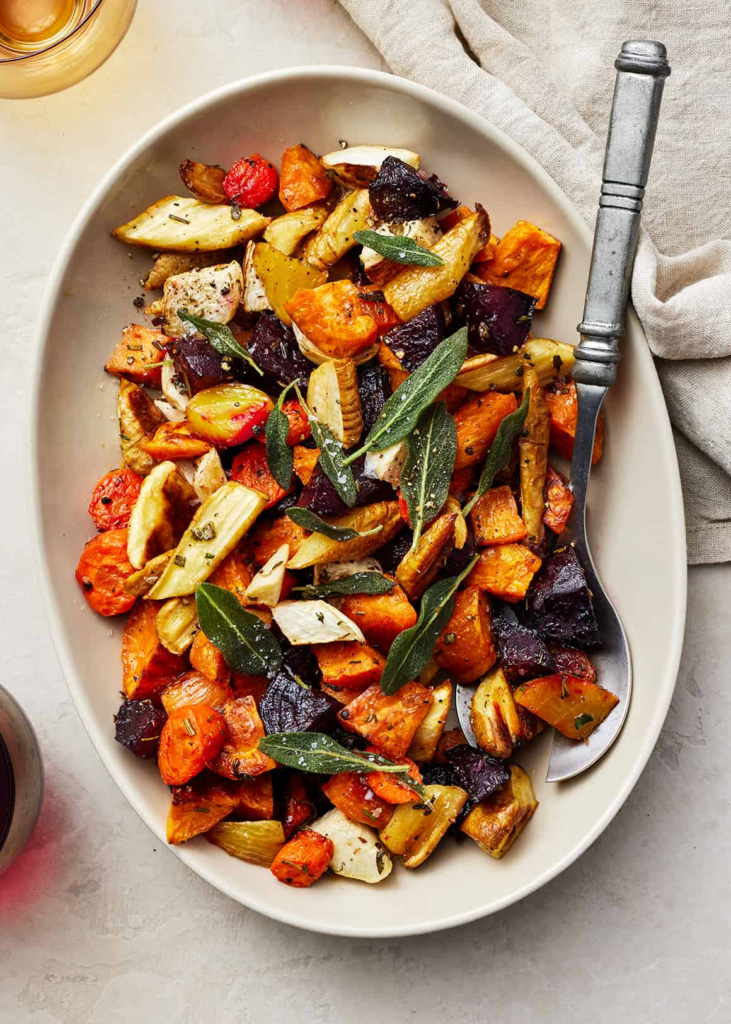
Try This Amazing Recipe By Loveandlemons
How to make it:
Cube whatever root vegetables you have — sweet potato, beets, carrots, parsnips, turnips. Toss with generous olive oil, salt, pepper, garlic powder, and fresh rosemary or thyme.
Spread in a single layer on a baking sheet — do not crowd or they steam instead of roast. Roast at 425°F for 30-35 minutes, flipping once halfway.
Eat as a side to protein or alone as a meal with a fried egg on top. Make a large batch — they reheat perfectly and require no thought on subsequent days.
Pumpkin seed and sunflower seed trail mix:

Try This Recipe by Adishofdailylife
Warm oatmeal with ground flaxseed and berries:
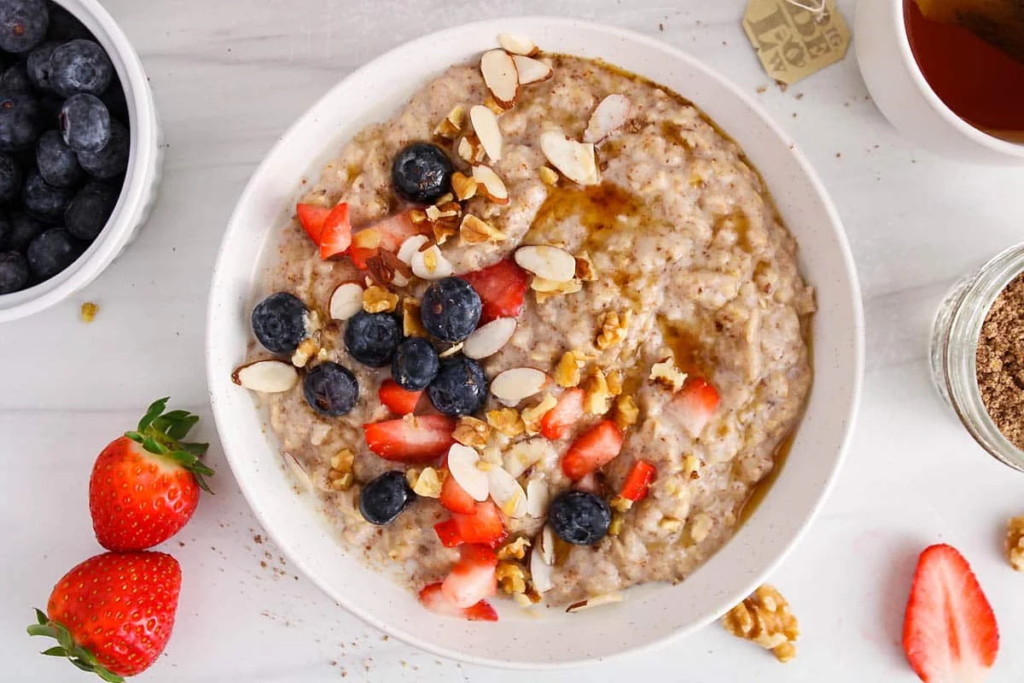
Try This Amazing Recipe By Plantbasedjess
How to make it:
Cook 1/2 cup oats on the stove with milk or water for 5 minutes, stirring. Stir in 1 tbsp ground flaxseed — must be ground, not whole, for lignans to be bioavailable.
Add 1 tsp maple syrup, a pinch of cinnamon, and a small pat of butter.
Top with a generous handful of blueberries or mixed berries.
Eat before the day’s demands begin.
Make this your daily burnout recovery breakfast for at least 4 weeks and track how your afternoon energy changes over time.
Greek yogurt with honey, walnuts and blueberries:

Try This Amazing Recipe By Lovegrowswild
How to make it:
Scoop generous plain Greek yogurt into a bowl. Add a large handful of blueberries.
Scatter 8-10 walnut halves. Drizzle raw honey — not regular processed honey, raw honey retains the prebiotic oligosaccharides that make it useful here. Sprinkle ground cinnamon.
Eat this as breakfast or an afternoon snack. Make it beautiful if you can — burnout tends to make everything feel utilitarian and colorless.
A beautiful bowl of food is a small act of self-respect. Those matter during recovery.
Warm chamomile and lemon balm tea:
Black bean and avocado rice bowl:
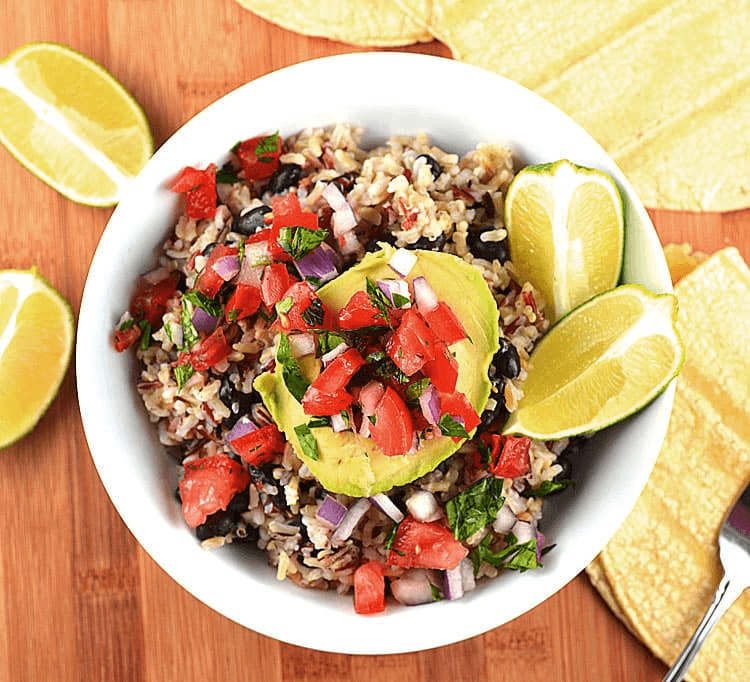
Try This Amazing Recipe By Theveglife
Black beans are one of the most iron and folate-rich plant foods available — both nutrients are consistently depleted in burnout and both directly affect energy production and mood stability.
Avocado provides pantothenic acid and healthy monounsaturated fat that supports adrenal hormone production.
The combination with rice gives you a complete amino acid profile — important because your body needs complete protein to rebuild the neurotransmitters that burnout depletes.
Nettle and ginger tea:
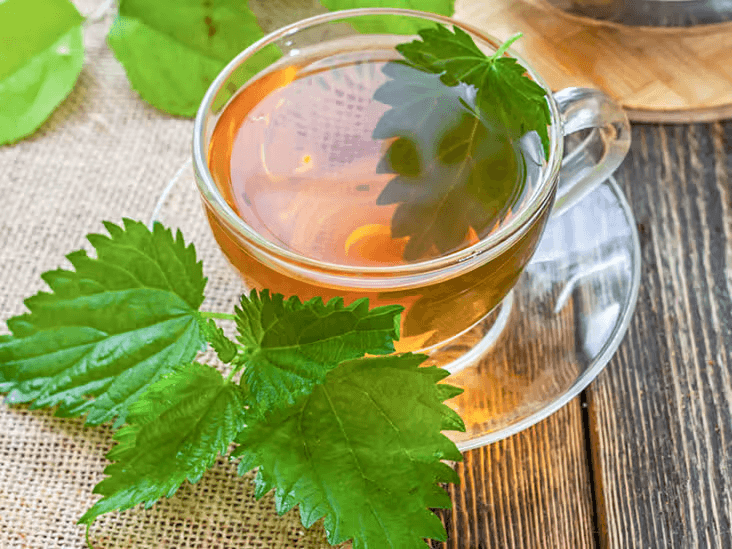
Stinging nettle is one of the most mineral-dense plants available — it contains iron, magnesium, calcium, potassium, and B vitamins in highly bioavailable forms.
It has been used specifically for adrenal support and fatigue recovery in herbal medicine traditions for centuries. Modern research confirms significant anti-inflammatory and adaptogenic properties.
Ginger adds anti-inflammatory gingerols and improves circulation to exhausted tissues. This tea is humble-looking and quietly powerful.
How to make it:
Find dried nettle leaf at a health food store or online — it is inexpensive and widely available.
Steep 1 tbsp dried nettle and a few slices of fresh ginger in 2 cups boiling water for 10 minutes covered. Strain. Add honey and lemon.
Drink one cup in the morning and one in the afternoon.
This is a two-week minimum practice — nettle’s mineral restoration works cumulatively.
It tastes clean and mild, like a green tea without the caffeine. Your adrenals will register it before your brain does.
Eat whatever is easiest today — and that is enough:
Burnout has a cruel irony: the days when your nutrition matters most are the days when cooking feels most impossible.
On those days — the truly flat, gray, can-barely-function days — the most important thing is not eating perfectly. It is eating something. Anything real. A banana. Toast with peanut butter.
Yogurt from the container. Cheese and crackers. Canned soup heated in the microwave.
The bar on the worst burnout days is simply: did I feed myself something that came from actual food? If yes, that is enough. You did enough.